

The Viviscent Wellness Foundation Village
A Vision for Sustainable, Community-Centric Living
The Viviscent Wellness Foundation Village is Envisioned as a Transformative Model of Holistic Community Living
A comprehensive, replicable eco-village and mixed-use community plan designed to foster sustainability, innovation, and well-being—targeting flagship sites in FLORIDA IN ADVANCE for a national rollout.
Key Concepts
- Sustainable & Replicable Design:
A 100-acre mixed-use development integrating modern residential solutions, an entrepreneurial retail village, and sustainability initiatives in a cohesive circular layout.- Innovative Eco-Building:
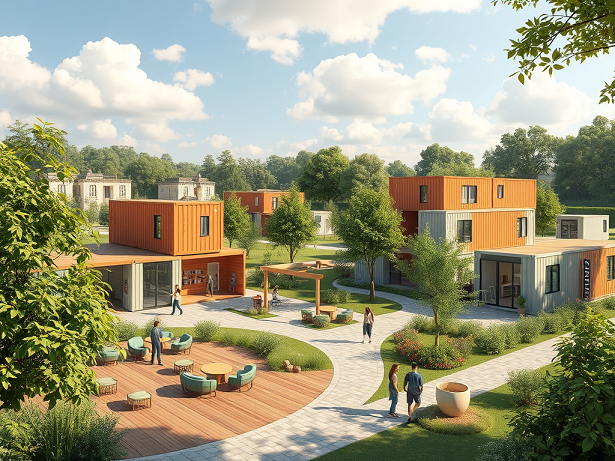
Constructed from repurposed shipping containers in a semi-subterranean, three-level configuration.
- 36 Private Living Units with designated intake units.
- 18 Common Spaces including library, game room, exercise facility, kitchen/dining (150+), laundry for 300+, and recreation areas.
- Entrepreneurial & Community Hub:
- 40 Themed Cargo Retail Stores across 20 acres.
- 7 Professional Spaces for workshops and retreats for 20–100 people.
- Sustainability & Resource Efficiency:
- Free open-source solar and water plans.
- Hydroponics, bee sanctuary, Aquapini, Walipini, and 12 greenhouses.
- Up to 150,000 lbs produce & 500 lbs honey annually.
- Holistic Community Support:
- Spectrum Valor Program for veterans and neurodiverse individuals.
- National Rollout Strategy:
- Flagship states: Arizona, Colorado, New York, Florida.
- Financial & Profit Overview:
- Fundraising Target: $50,000,000
- Revenue Streams: residential, rentals, retail, services, grants.
- ROI: 15–25% over 5–10 years.
1. Overview & Vision
At Viviscent Wellness Foundation, our vision is to create sustainable, replicable eco-villages blending modern living with nature. With a base of $50,000,000, the flagship 100-acre community will:
- Foster community and shared values.
- Champion sustainability using off-grid systems.
- Express art & beauty using reclaimed materials.
- Ensure replicability via materials kits and open-source plans.
- Support holistic living and the Spectrum Valor Program.
- Target AZ, CO, NY, FL for flagship sites.
- Project 15–25% ROI in 5–10 years.
2. Phased Master Plan for a 100-Acre Community
Land Use Breakdown
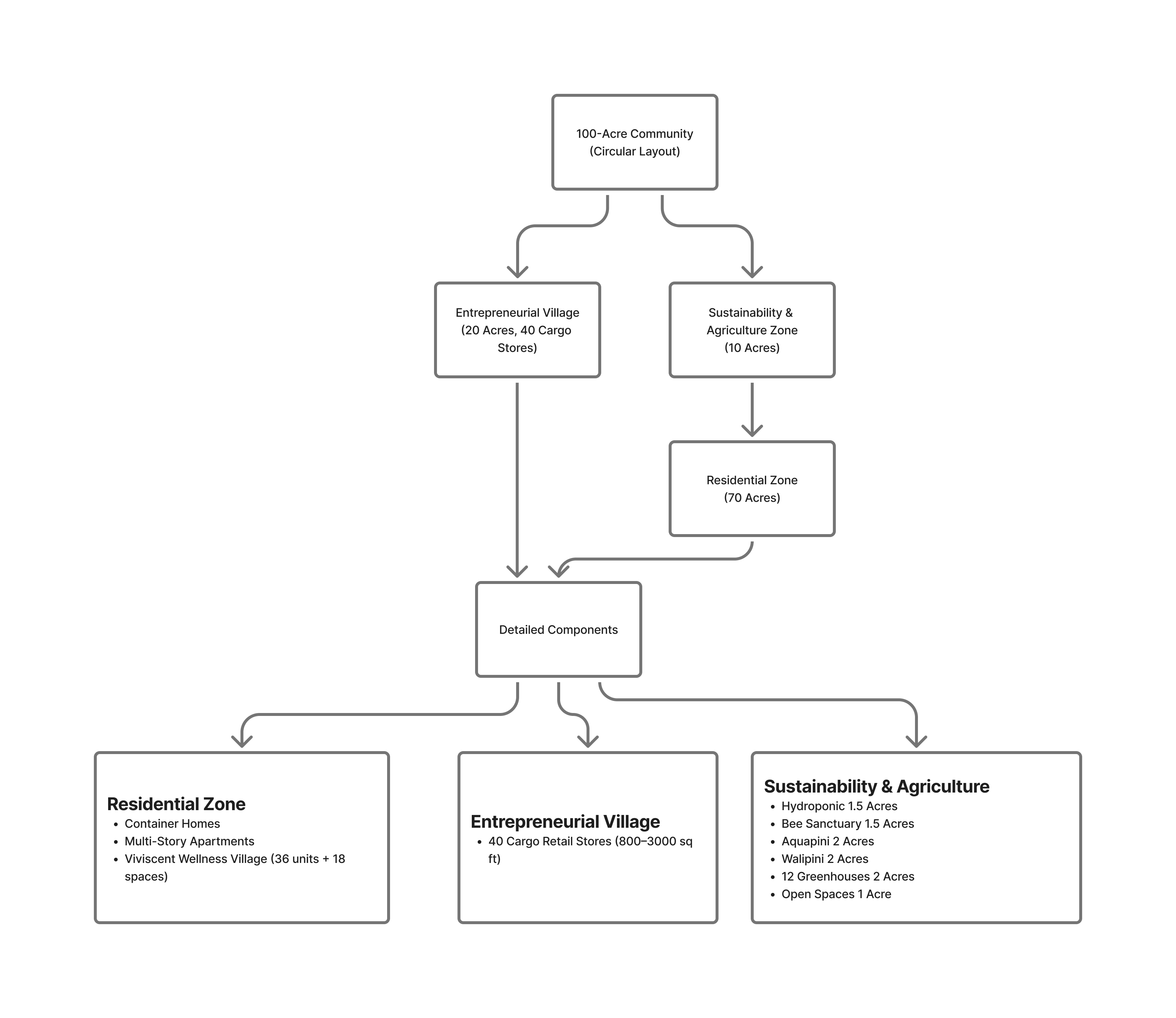
Total: 100 Acres
- Residential Zone (70 Acres)
- Cargo container homes: 10–15 units/acre → 700–1,050 units.
- Multi-story apartments: 20–30 units/acre → 1,400–2,100 units.
- Entrepreneurial Village (20 Acres)
- 40 themed retail stores (avg. 2,000 sq ft).
- Sustainability & Agriculture Zone (10 Acres)
- Hydroponics (150,000 lbs annually)
- Bee sanctuary (500 lbs honey)
- Aquapini & Walipini
- 12 greenhouses
- Community open spaces
3. Eco-Village Model Blueprint
- Replicable but culturally unique.
- Off-grid energy-efficient design.
- Highest Good food systems.
- Artistic reclaimed-material buildings.
- Communal structure promoting unity.
- Spectrum Valor Program integrated.
4. Infrastructure & Amenities
- Roads & Transit: pedestrian, bike lanes, road networks.
- Off-grid Utilities: solar, water systems from free plans.
- Community Facilities: kitchens, labs, community centers.
- Green Initiatives: green roofs, rainwater harvesting.
5. Village Concept
A semi-subterranean, three-level container community featuring:
- 36 Private Living Units
- 18 Community Spaces including:
- Community lounge
- Orientation center
- Multipurpose room
- Co-working area
- Meditation room
- Kitchen & dining hall (150+)
- Event space
- Library
- Maker space
- Counseling center
- Fitness studio
- Childcare
- Tech hub
- Indoor garden
- Reflection room
- Media center
- Training room
- Pop-up retail area
6. Cost Analysis & Projections
Land & Prep
- Land (100 acres @ $10,000): $1,000,000
- Site prep: $3M – $5M
Construction Costs
- Container homes: $23.8M – $33.4M
- Apartments: $17.9M – $26.8M
- Retail village (40 stores): $1M
- Sustainability facilities: $5M – $7M
Infrastructure:
$8M – $12M
Management & Contingency:
$4M – $6M
Revenue Streams:
- Residential sales/rentals
- Retail leasing
- Workshops & events
- Agriculture output
- Government grants
Projected ROI: 15–25% (5–10 years)
7. Implementation Timeline
Phase 1: Planning (0–12 months)
Phase 2: Infrastructure (12–24 months)
Phase 3: Build-Out (24–48 months)
Phase 4: Integration & Replication (48+ months)
8. Circular Layout Diagram
9. Conclusion
A complete plan integrating sustainability, replicability, profitability, and community well-being, delivering a national blueprint for future eco-villages.